
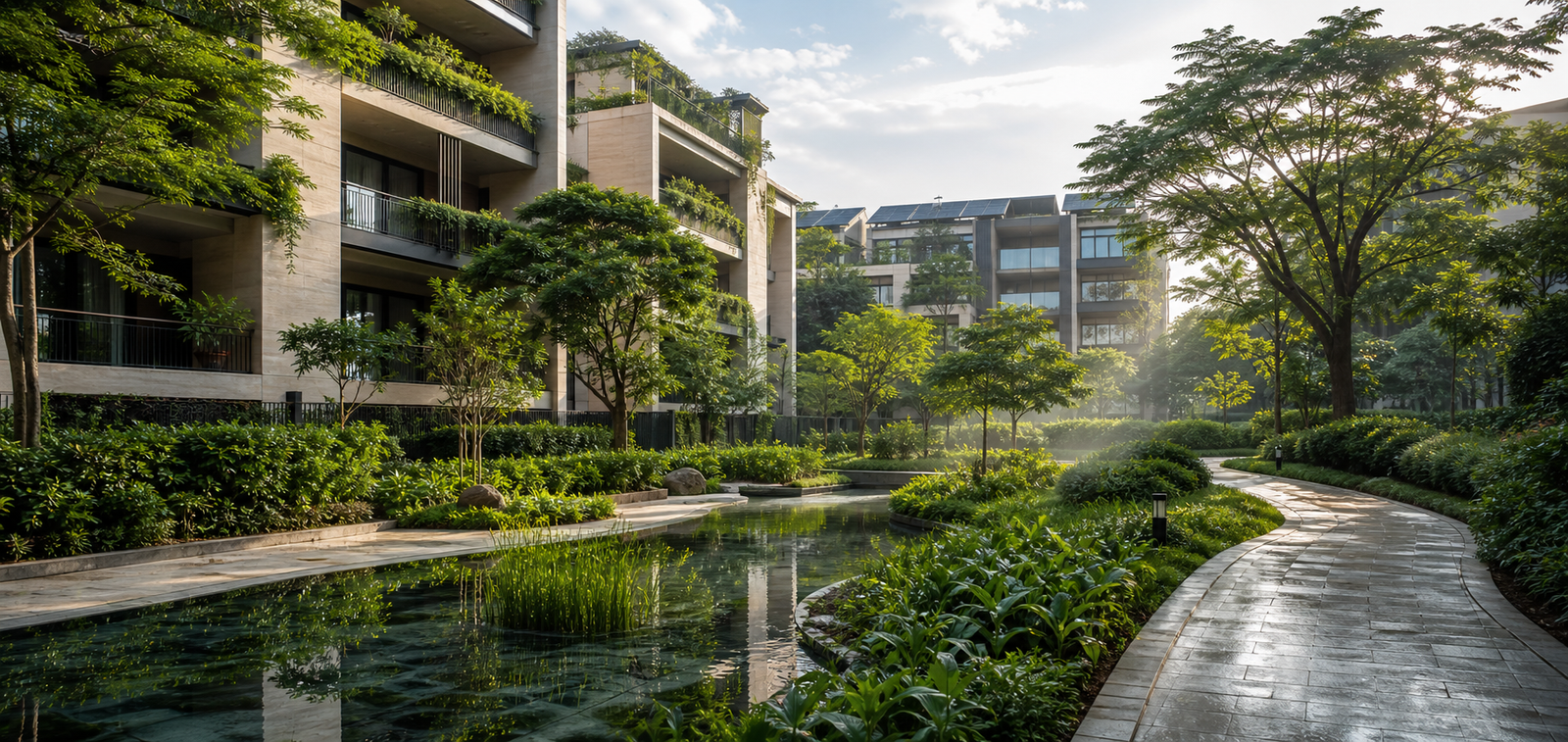
Begin with orientation and the envelope
Shading, window placement, wall and roof performance, daylight and natural ventilation influence indoor comfort before an appliance is switched on. Ask how the design responds to Bengaluru’s sun, rain and seasonal airflow rather than accepting a generic sustainability label.
Examine water as a complete cycle
Review source reliability, metering, low-flow fixtures, rainwater harvesting, recharge, wastewater treatment and reuse. The value comes from a connected system with a clear maintenance plan, not isolated equipment listed in a brochure.
Check energy demand before generation
Efficient lighting, pumps, lifts, common-area controls and well-designed homes can reduce demand continuously. Solar generation may add value, but first ask what loads it serves, how output is monitored and who maintains the system.
Prefer durable, maintainable choices
Materials should be considered for durability, local suitability, repairability and indoor impact. A finish that needs early replacement can create more cost and waste than a restrained material chosen for a long service life.
Ask for operating evidence
Request the design basis, system capacities, expected maintenance responsibilities and metering approach. After occupancy, simple monitoring of energy, water and waste helps a community find problems and improve performance over time.
This article provides general information and is not a substitute for project-specific legal, financial, architectural or engineering advice.